

Autumn is a wonderful time to be a Blackberry muncher – you cannot fail to notice bramble bushes hanging heavily with fruit at this time of year.
According to archaeological evidence (seeds found in the stomach of a Neolithic Essex man), man has been blackberrying for at least 8000 years – and that really is no surprise.
Blackberries are not actually true berries, but aggregate fruits, agglomerations of individual berries known as drupelets. The druplets form in clusters at the end of mature shoots, which die back after 2 or 3 years fruiting. The blackberry at the very tip of the stalk is the first to ripen, and the sweetest and fattest of all. A few weeks later, the other fruits near the end ripen. These are less juicy (but just fine for pies and jams). By the end of October the remaining berries have often picked up mildews and bacteria and turned sour or cloying. There is an old lore to discourage the picking of these inferior specimens which says that the Devil runs rampant through the countryside on Michaelmas night (Sep 29th) spitting, stamping and peeing on all remaining fruit – which certainly would account for their diminishing appeal!
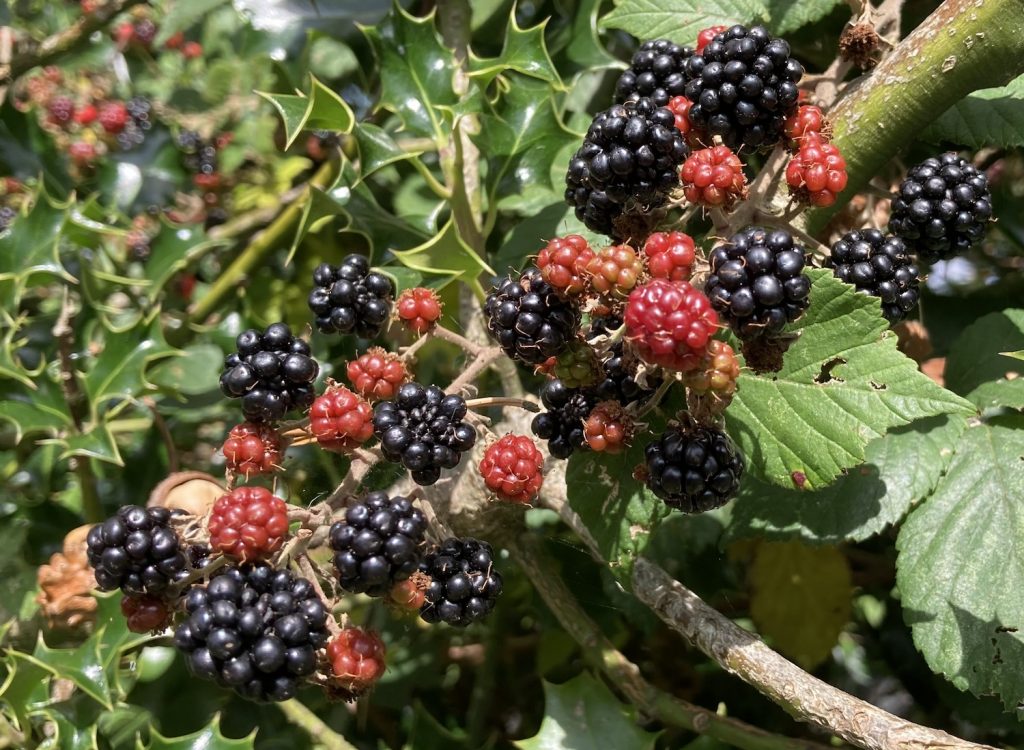
Over 320 ‘microspecies’ of bramble have been identified and recorded, with up to an estimated 200 yet to be documented – more info here www.bsbi.org.uk/Rubus_Crib.pdf. Connoisseurs have even detected the subtleties between these varieties – fruiting time, size, texture and taste (hints of plum, grape, apple or lemon).
Blackberries are, of course, good for you as well as being tasty to eat. A single cup serving of blackberries contains:
- 62 calories, 1 gram of fat, 2 grams of protein, 14 grams of carbohydrate
- This includes 8 grams of dietary fibre – the daily requirement is 25 to 30 grams which helps in keeping you full for longer and limits your risk of diverticulitis, constipation and heart disease.
- 50% of the daily requirement of vitamin C, which is essential for repairing cells and healing wounds
- 36% of the daily requirement of vitamin K, which is required for proper blood clotting
- Significant amounts of folate, magnesium, potassium, iron, zinc and niacin, and vitamins A and E.