
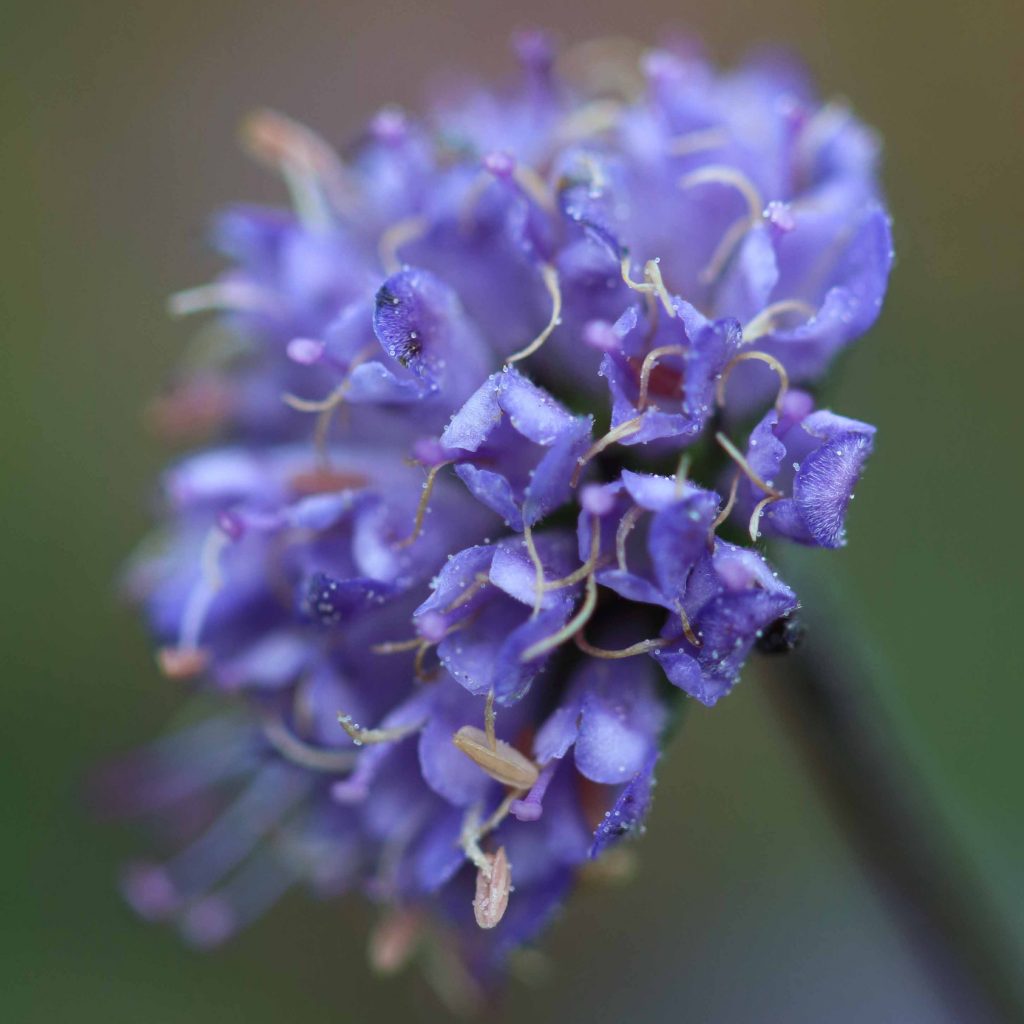
Over the winter period, various contractors will be helping the Lizard National Nature Reserve (NNR) Natural England team undertake habitat management work. This work aims to restore the wet heaths and grasslands, with the primary aim to increase the abundance and density of Devil’s-bit Scabious Succisa pratensis, the food plant of the Marsh Fritillary caterpillar.
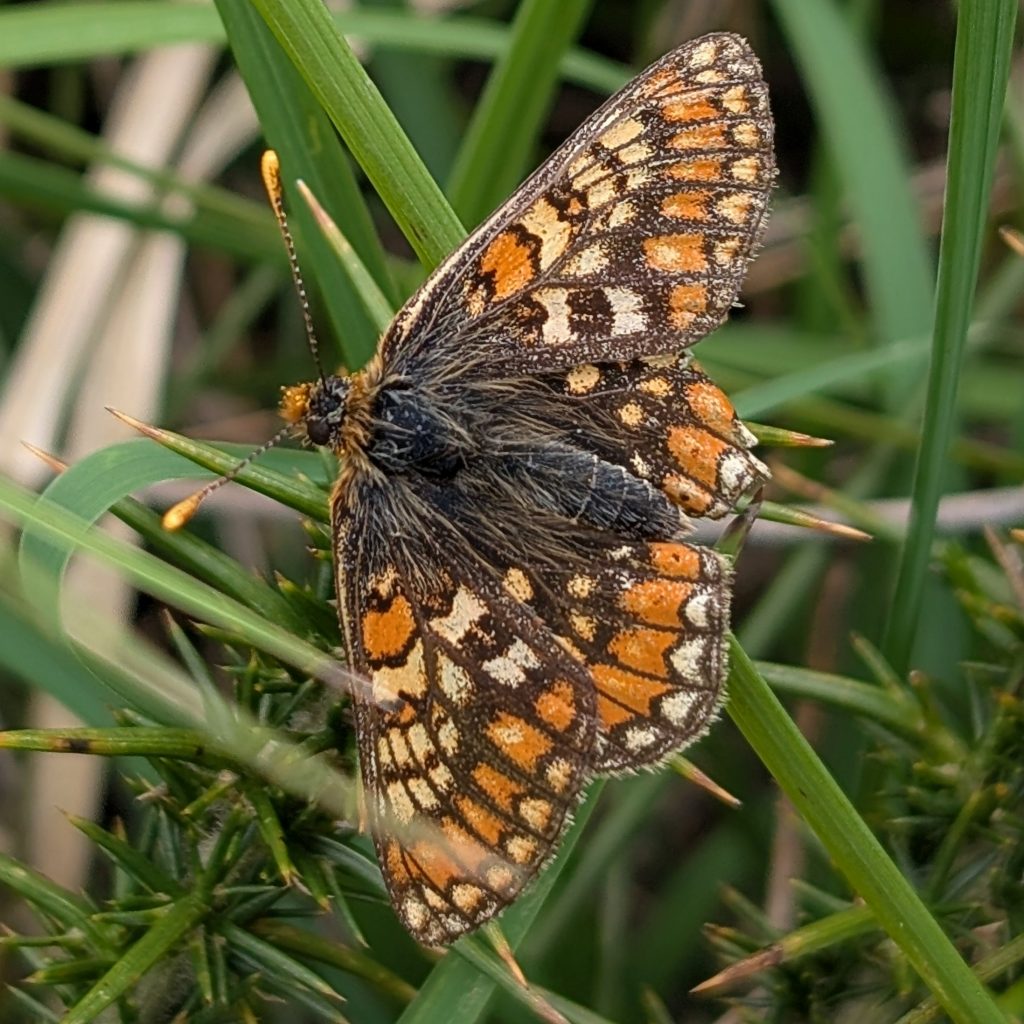
Marsh Fritillary has been lost from much of its range through habitat destruction and fragmentation. The species is now disappearing from extensive, largely unfragmented sites within its current English strongholds, with South-west England being a key area. In recent years, the species has been seen in 13 principal sites on the Lizard peninsula, along with a scatter of one-off sightings elsewhere. However, 2024 was the poorest showing on the Lizard to date (sightings at just two sites). Whilst ‘bad’ weather exacerbated issues, the overall decline largely results from undermanagement of key wet heath, with associated declines in Devil’s-bit Scabious. We are therefore focusing our efforts on managing the key sites within Natural England’s control.
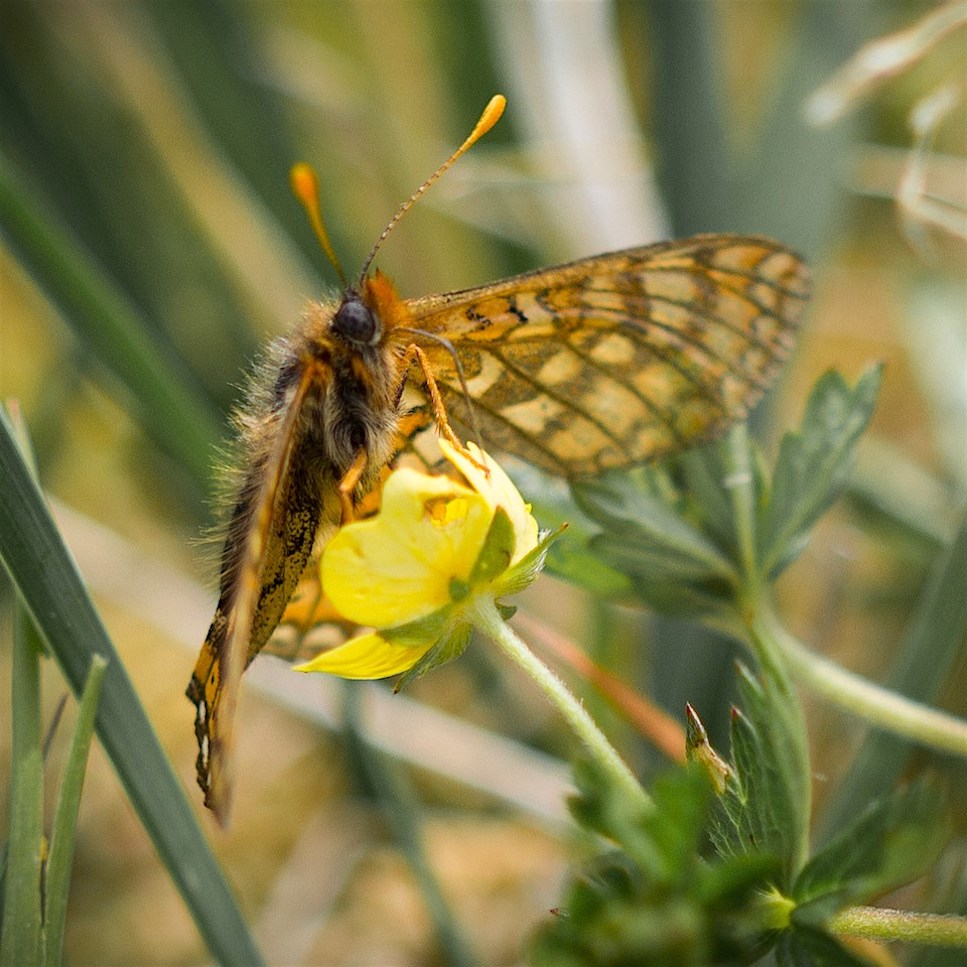
Marsh Fritillary adult butterfly recorded on Goonhilly Downs, June 2025, by Natural England volunteer surveyors (photo: Chris Waddle)
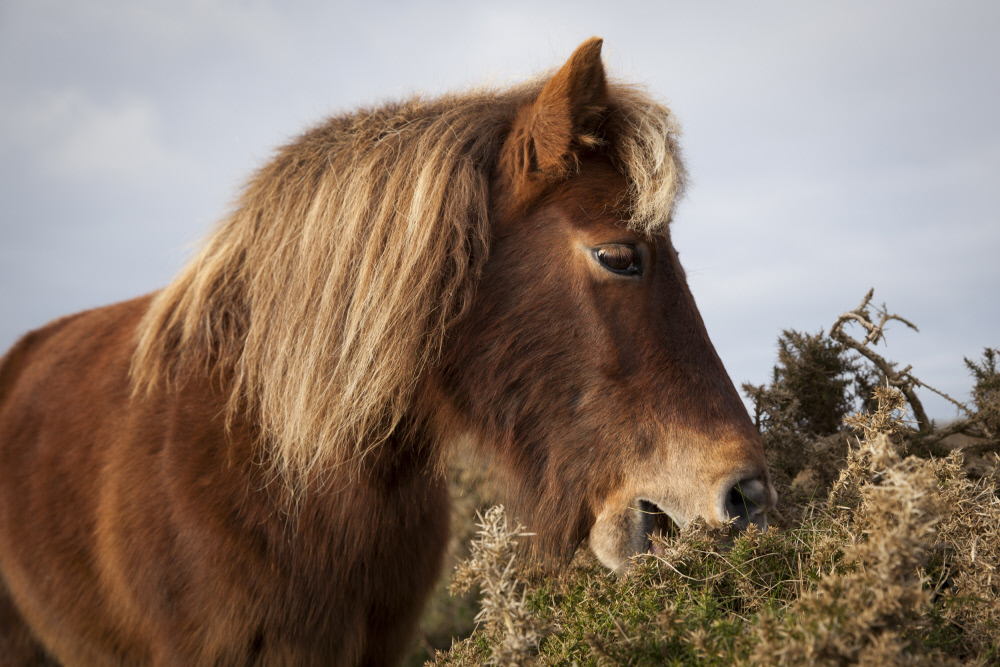
This year, therefore, the habitat management work primarily involves light, controlled burns of wet heath areas within and adjacent to the known Marsh Fritillary sites. Burns will create bare ground for plant germination, including the Devil’s-bit Scabious. The burning will be followed by grazing of the areas by cattle and ponies.
There will also be some pool restoration work on Goonhilly Downs, including Croft Pascoe Pool, to remove overgrown vegetation and increase the proportion of open water.
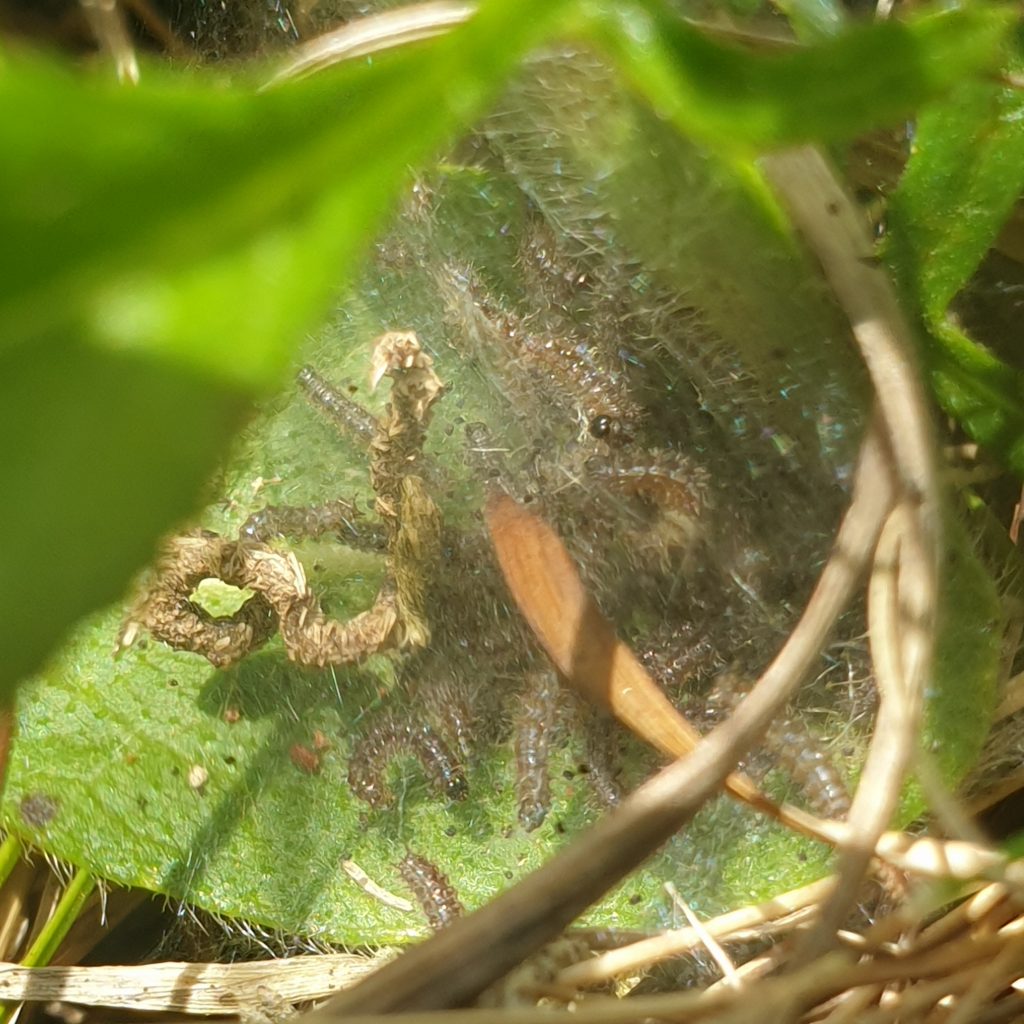
Marsh Fritillary caterpillars in their web, Crousa Downs, July 2025 (photo: Sarah Board)
These management works are being undertaken during the winter period to minimise disturbance and injury to species, when many are in hibernation or are dormant, and avoids the main bird nesting season.
The works are being funded through the Natural England Species Recovery Programme (SRP). We will be monitoring these works closely, surveying the areas in subsequent years to find out how quickly the Devil’s-bit Scabious and hopefully the Marsh Fritillary respond.
Dense area of vegetation on Goonhilly Downs planned for a light controlled winter burn (photo: Sarah Board)
