
Tag: The Lizard
-

Smooth Hawk’s-beard
Often found on bare ground and road verges, as well as on heaths and grasslands, the yellow flowers of Smooth Hawk’s-beard can be seen brightening The Lizard from mid-summer until early autumn. Photo: Jason Hollinger, via Wikimedia Commons
-

Dodder
Watch out for the red stems of the parasitic plant Dodder scrambling over gorse and heather. It flowers between July and September. Photo: Amanda Scott
-

Cornish Heath
The lovely Cornish Heath, in Great Britain only found growing naturally on the serpentine rocks of The Lizard, starts to flower in mid-summer. Photo: Amanda Scott
-

Chamomile
Chamomile blooms from mid-summer, carpeting and scenting grassy fields on the Lizard. Photo: Amanda Scott
-

Round-leaved Sundew
The paths and open firebreaks of the Crousa Downs are a good place to look for Round-leaved Sundew in the summer. Photo: Amanda Scott
-

Hummingbird Hawk-moth
Hummingbird Hawk-moths are migratory visitors to The Lizard in good summers. Photo: © Natural England/Allan Drewitt
-

Dropwort
Dropwort is a lover of basic soils, and can be found blooming on the serpentine of The Lizard from May to August. Photo: Amanda Scott
-

English Stonecrop
Carpets of English Stonecrop flower from June to September on the rocks of The Lizard. Photo: Amanda Scott
-

Wild Carrot
The umbels of Wild Carrot flower on the clifftops between June and August. Photo: Amanda Scott
-
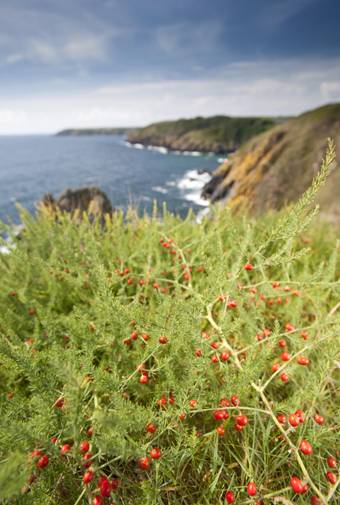
How a Cornish boy hooked up with a Dorset girl: a tale of Wild Asparagus
The Lizard Peninsula is justifiably well known for its rare and unusual plants. Whilst many of these plants have obscure and peculiar names, such as Fringed Rupturewort, Land Quillwort and Hairy Greenweed, reflecting their, well, obscure and peculiar status, others have more familiar names, such as Wild Chives, Chamomile and Wild Asparagus. Wild Asparagus was previously…
-

Fringed Rupturewort
Fringed Rupturewort, one of the rare plants of the Lizard, can be seen in sandy and rocky habitats. A small, unassuming plant, look for its brighter green colouring among the surrounding vegetation. Photo: Tony Blunden
-

Thyme Broomrape
Thyme Broomrape can be spotted along the sea cliffs in early summer. Just south of Kynance Cove is a good place to spot this distinctive plant. Photo: © Natural England/Neil Pike
-

Common Milkwort
The grassy cliff tops of The Lizard are full of Common Milkwort from spring and into summer – the coastal path between Coverack and Lowland Point is a good place to spot this delicate, pretty plant. Photo: Amanda Scott
-

Twin-headed Clover
Caerthillian is one of the best places to see some of the rare clovers that are found on the Lizard in late spring, including Twin-headed Clover. Photo: Steve Townsend
-
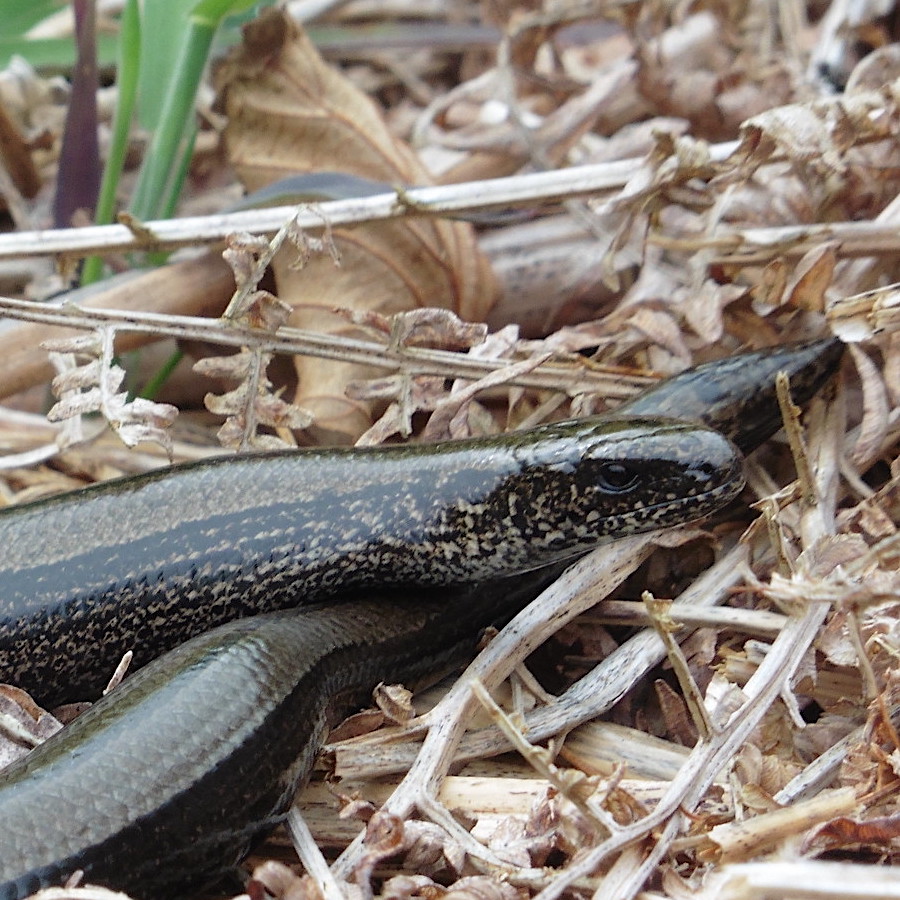
Slow Worm
Slow Worms are perhaps our most secretive lizards. Photo: © Natural England/Philip Ray
-

Long-headed Clover
Long-headed Clover, one of the the Lizard’s clover specialities, flowers on the cliffs at Caerthillian in early summer. Photo: Sam Thomas, CC BY 2.0, via Wikimedia Commons