
Mindblown: a blog about philosophy.
-
Grassland land mammals
-
Grassland insects and invertebrates
-
Grassland plants
-
Grassland birds
-
Grassland butterflies & moths
-
Willow woes
During the summer of 2023 there was a subtle but significant browning of the leaves on some of the Grey Willow, Salix cinerea, in the willow carr (wet woodland) at Penrose. Although noticeable we were unable to get to the bottom of the issue then. However, this year the browning leaves have returned with a vengeance…
-
Back to the future: restoring threatened metapopulations on the Lizard Peninsula – update, August 2024
A progress update on The Lizard’s Species Recovery Programme-funded project Following our busy winter period of habitat management work across the west of the Lizard, we learnt in March 2024 that we had been successfully awarded Species Recovery Programme (SRP) funding to continue our Back to the Future Lizard SRP Project into a second year. This funding…
-

Common Bird’s-foot Trefoil
If you ever wondered how Bird’s-foot Trefoil got its name, you have to wait for the seedpods to appear. Photo: Amanda Scott
-

Marine
The seas around The Lizard are teeming with all kinds of marine life, from Basking Sharks, whales and Oceanic Sunfish in the summer, to migrating and foraging sea and shoreline birds. The coastline and seas around the peninsula are an important habitat for seals, particularly Grey Seals, 38% of the global population of which make…
-
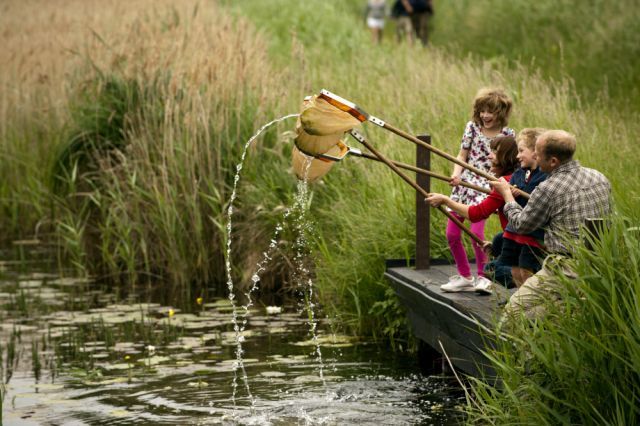
Freshwater
The Lizard has many examples of temporary ponds – sometimes called ephemeral pools – that are inundated with water in the winter but dry out in the summer. Some of these ‘ponds’ are not much more than muddy puddles associated with the trackways that criss-cross the heaths, but there are also larger pools, such as…
-

Woodland and hedges
While The Lizard is not significantly wooded, there is woodland around the Helford River and its creeks, where some of the woods are classified as temperate rainforest. There are also other examples of deciduous woodland at the rear of the Kennack Sands dunes, and significant wood cover around the Loe on the Penrose Estate, where…
-

Cliffs and Coastline
Much of The Lizard’s coastline is dominated by tall rocky cliffs, particularly on the more exposed west coast of the peninsula which faces the Atlantic head on. Here you will find plants with a more stunted habit – such as Ox-eye Daisy – than they would in more sheltered places. Some plants thrive on the…
-

Grassland
Lowland grassland or meadow has a rich plant biodiversity; you will find several grass species, and other plants such as Knapweed, Ox-eye Daisy, Chamomile and Bird’s-foot Trefoil. On The Lizard, grassland is particularly noted for supporting several rare clover species, including Long-headed Clover, Western Clover and Twin headed Clover, and other rare plants, such as…
-

Heathland
An added factor on The Lizard is the underlying serpentine bedrock. This influences the soil composition, making it less acidic, and so plants that you would not expect to find on heathland, such as Bloody Crane’s-Bill and Cornish Heath – the latter of which is restricted to The Lizard in the UK – can be…
-
Nature recovery on The Lizard
The following is the text of a National Trust press release, issued on 27/3/2024, reporting on a landscape-scale project to conserve rare species on The Lizard, funded by Natural England’s Species Recovery Programme. Nature recovery on the Lizard is working from the ground up Down on the Lizard, in deepest Cornwall, a landscape-scale coastal project…
-
Wildlife Groundswell newsletter 03-24
What’s on? Upcoming events Meeting & walkabout Sunday 17 March, 11.30am, Trethewey Farm, St Martin TR12 6EG How to make the most of a wildlife friendly space, big or small? For anyone interested in joining a small group in Wildlife Groundswell to develop wildlife friendly management of whatever land we have. There will be tea,…
Got any book recommendations?