
Tag: Flora
-

Subterranean Clover
Lizard ‘clover season’ is from spring to early summer. One to look out for is the small and unassuming Subterranean Clover, found on shallow soils or amongst short turf close […]
-

Wild Chives
Lovely Chives can be found flowering from May to July. Mullion Cliffs is a good place to spot them. Photo: © Natural England/Neil Pike
-

Early-purple Orchid
Early-purple Orchids enjoy the serpentine soils of the Lizard. Photo: © Natural England/Allan Drewitt
-

Opposite-leaved Golden-saxifrage
Opposite-leaved Golden-saxifrage is a low, spreading plant that lights up damp shady places with a golden glow in spring. Photo: Steve Townsend
-
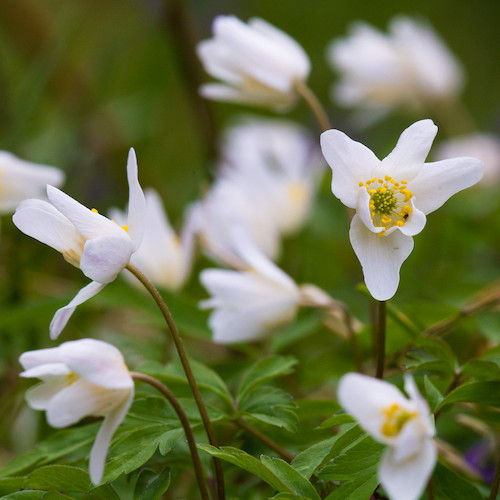
Wood Anemone
Also known as Windflower, the Wood Anemone is a flower of early spring, found in woodland glades and old hedgerows.Photo: © Natural England/Allan Drewitt
-

Golden Hair-lichen
It is always a pleasure to find the rare and beautiful Golden Hair-lichen. Kynance is a good place to search. Photo: Björn S…, CC BY-SA 2.0, via Wikimedia Commons
-

Lesser Celandine
The bright buttery glint of Lesser Celandine in the hedgerows and fields is a welcome early sign of spring. Photo: Amanda Scott
-

Three-lobed Crowfoot
This speciality of muddy tracks and ruts on The Lizard starts to show its delicate, tiny white flowers in February and March. Photo: Amanda Scott
-

Dog’s Mercury
Found mainly in woodlands and hedgerows, Dog’s Mercury is far from showy, but is distinguished by being one of the earlier plants to flower each year. Photo: Krzysztof Ziarnek, Kenraiz, […]
-

Land Quillwort
Look out for the ‘Catherine Wheel’ leaf rosettes of Land Quillwort between autumn and spring, a plant that, in mainland Britain, is only found on The Lizard. Photo: Steve Townsend
-

Winter Heliotrope
This winter-flowering, vanilla-scented plant of waste places and roadsides is not native to Britain, but is a valuable source of nectar for emerging insects in the earliest days of spring. […]
-

Sea Campion
Sea Campion, a flower of early to mid-summer, flowers into the autumn on The Lizard’s clifftops. Photo: Amanda Scott
-

Butcher’s-broom
Interesting name, unusual plant – watch out for the small green flowers in late winter and the large red berry fruits between October and May. Kennack Sands is a good […]
-

Ivy
Ivy provides shelter and food for many species of invertebrates, birds and small mammals, so its autumn flowers are a welcome sight. Look out for it climbing up trees or […]
-

Wild Teasel
The dried spiny seedheads of Wild Teasel persist throughout the autumn and winter. They can be found in many habitats, including sand dunes, providing food for birds like Goldfinches. Photo: […]
-

Marsh Ragwort
Marsh Ragwort can be seen flowering in the marshier places and wet meadows on the Lizard from high summer to early autumn. Photo: Marsh Ragwort , Baltasound by Mike Pennington, via […]